Welcome to Fayetteville, NC: Your Trusted Relocation Guide
If you’re thinking about moving to Fayetteville, NC or PCSing to Fort Bragg, this blog is designed to help you learn about the area, the local real estate market, and the surrounding communities. Whether you’re relocating for military service, work, or a fresh start, you’ll find practical local information here to help guide your decision.
This blog covers the topics buyers, sellers, and relocating families care about most, including the best places to live near Fort Bragg, local suburbs and nearby cities, schools, parks, commute times, home prices, community events, and the pros and cons of different areas. You’ll also find helpful real estate advice for military families, veterans, first-time buyers, home sellers, and anyone trying to better understand the Fayetteville, NC housing market.
We share local insight on Fayetteville, Hope Mills, Raeford, Spring Lake, Stedman, and Eastover so you can compare areas and feel more confident before making a move. From affordable homes and relocation guidance to local market knowledge and community tips, this blog is built to help you make smarter real estate decisions in and around Fort Bragg.
Moving brings hard choices. We make it easier. Fayetteville anchors the region with jobs, schools, parks, and flights. Use this guide to compare nearby cities and suburbs fast—without digging through ten tabs.
Compare Commute Times and Homes by City
Pick a city to see live listings and average drive times to Fort Bragg gates.
Fayetteville The regional hub. Hospitals, colleges, museums, and events all center here—quick airport trips, growing downtown. Neighborhoods to know: Haymount, Westover, and the Jack Britt district. Top schools: Jack Britt High, Pine Forest High, and New Century International Middle. Best for: access, price range, and shorter drives to many gates.** access, price range, and shorter drives to many gates.
Hope Mills Suburban feel with parks, ball fields, and easy shopping. Neighborhoods to know: Gray’s Creek, Cypress Lakes. Top schools: Gray’s Creek High, South View High. Best for: families and first-time buyers.** families and first-time buyers.
Raeford Small-town tone with room to breathe. You’ll stretch your dollar further. Neighborhoods to know: West Raeford, Rockfish area. Top schools: Hoke County High, Sandy Grove Middle. Best for: space and quiet.** space and quiet.
Spring Lake Close to multiple gates. An easy commute can be a game-changer. Top schools: Overhills High, Spring Lake Middle. Best for: short drives to the post.** short drives to the post.
Southern Pines Charming, walkable downtown. Local shops and parks. Top schools: Pinecrest High, Southern Middle. Best for: strolls, coffee stops, and small-town charm.** strolls, coffee stops, and small-town charm.
Pinehurst Polished, golf-forward lifestyle. Resorts and tidy neighborhoods. Top schools: Pinecrest High, West Pine Middle. Best for: golfers and upscale pace.** golfers and upscale pace.
More Quiet or Rural Options
Some offer bigger lots. Others draw those who value quiet nights and local pace:
Eastover – Peaceful with easy access to I-95
Stedman – Small-town charm near Fayetteville
Parkton – Great if you want land and less bustle
Linden – Quiet and tree-filled, 15–25 mins to post
Wade – Laid-back with easy highway access
Cameron – Country feel with newer builds
Sanford – More suburban, with big-box shopping and parks
Lillington – Great halfway point if commuting both north or south
Dunn – Budget-friendly and community-focused
Aberdeen – Near Pinehurst, with a mix of charm and value
How to Choose Fast
Know your duty station entrance: Find out which Fort Bragg gate you’ll use most (based on your unit, school, or work location).
Set a commute range: Decide how far you're willing to drive during peak hours.
Match cities to daily needs: Prioritize access to groceries, gyms, parks, and medical care.
Pick your school zones early: This narrows your search fast and avoids future headaches.
Set your price range: Know your BAH or budget and filter homes accordingly.
Quick FAQ
What’s closest to Fort Bragg? Spring Lake and parts of Fayetteville, depending on your gate.
Where do golfers buy? Pinehurst and Southern Pines lead the list.
Best suburb near shops and parks? Hope Mills fits that bill.
Fast Shortlist Before You Go
Start with:
Fayetteville
Hope Mills
Raeford
Spring Lake
Add Pinehurst or Southern Pines if lifestyle is your top filter.
PCS orders in hand, family in tow, and a giant post to navigate — finding the right place to live near Fort Bragg can either streamline your day or add 45 minutes of gate-line frustration.
This 2025 guide ranks suburbs based on what military families actually care about: commute time, schools, affordability, and lifestyle. Whether you’re E5 on a timeline or O3 with kids, you’ll walk away with clear options.
🎯 Rule #1: Choose Based on Your Gate
Fort Bragf is enormous. That “15-minute commute” becomes 45 minutes real fast if you pick the wrong suburb for your unit’s gate.
Confirm this first:
✅ Where is your unit located on post?
✅ Which gate will you use daily?
✅ When does PT or duty start (usually 0600)?
🥇 Top Areas to Live Near Fort Bragg — Ranked by Commute + Quality of Life
Let us map commute times + filter listings for your rank and budget. 📲 Contact All American Realty Group at (910) 988‑8578 📍 3820 Raeford Road, Suite A, Fayetteville, NC
Buying a new home near Fort Bragg can feel like a huge task. There are many builders, and each one works a little differently. Some offer speed. Some offer better design. Others try to stay as budget-friendly as they can. We put this guide together to help you sort through the options without the guesswork.
If you are moving to Fort Bragg or planning a PCS, new construction can make life easier. You avoid most repairs, you get a clean home, and you know what you are walking into. If you want a deeper look at daily life here, you can explore our guides on:
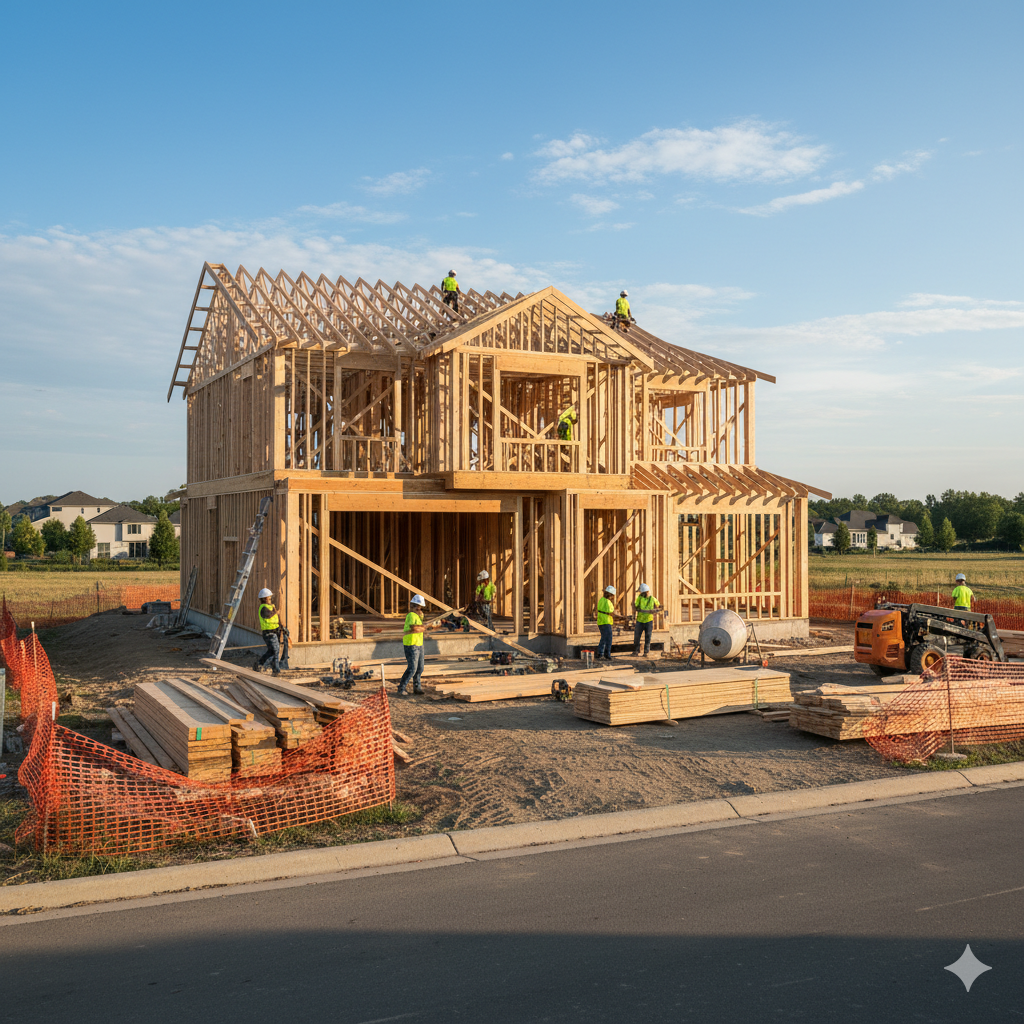
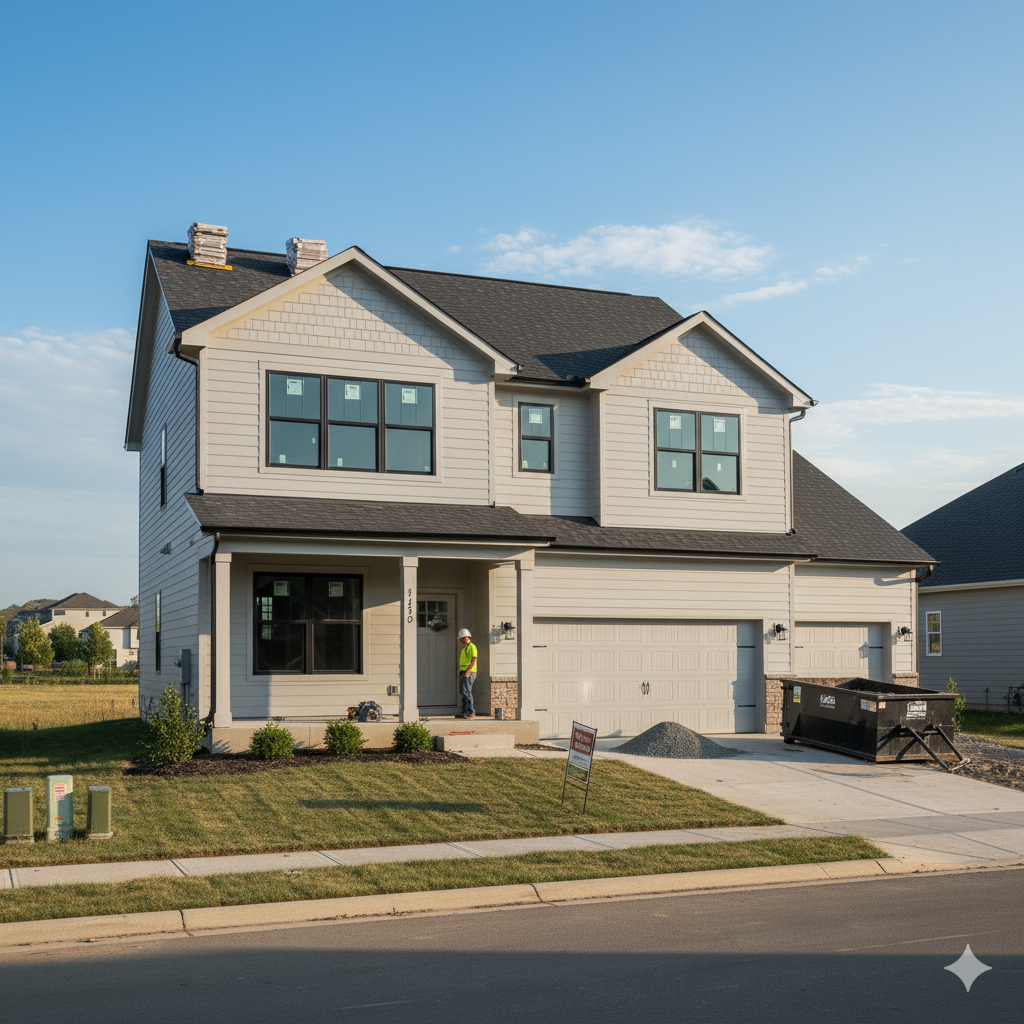
Ben Stout is a local builder based in Fayetteville. Their office sits close to downtown, which keeps them plugged into the regional markets. They focus on value and speed. Many of their homes are spec builds so that you can move in fast—great for military families with tight PCS timelines.
Ben Stout homes usually range from 1,500 to 2,500 square feet with open floor plans and simple, practical designs. Many buyers appreciate the value, though some reviews note inconsistent workmanship. Touring a few finished homes is highly recommended.
JSJ Builders is a family-run company with a strong presence in the Fayetteville and Harnett County areas. Their homes fall into the starter to mid-level category, generally between 1,800 and 2,400 square feet.
Layouts are open and functional, with straightforward, livable designs. Some buyers highlight the value; others wish the craftsmanship were more consistent. Definitely ask about warranty coverage and walk through a few of their builds.
Caviness & Cates
Caviness & Cates has been building since the late 1990s and is one of the more recognizable names in the area. They built in:
They offer more floor plans than most builders and often include community amenities like clubhouses, pools, and trails. Their homes feel more polished, and buyers get some design customization through their design center. Reviews are generally very positive.
They’re known for strong communication and post-closing support—key for buyers who won’t be nearby. Homes tend to be simple, energy-efficient, and built with long-term reliability in mind. Customization options are more limited, but the trade-off is steady quality.
Most homes fall in the upper $200s to mid $300s, with larger kitchens, covered porches, and 9’ ceilings. Buyers often love the look and layout, though some reviews cite slower warranty response. It helps to ask which team handles your specific neighborhood.
Best Suburbs for New Construction Near Fort Bragg
Raeford – Lower taxes (Hoke County), spacious neighborhoods.
Hope Mills – Close to the post, family-friendly feel. Explore more
Fayetteville – Largest range of builders and price points.
Cameron & Linden – Quieter, more land, good for those wanting a little space.
Tips for Picking the Right Builder
Always hire your own agent. Builder reps work for the builder.
Get a home inspection—even for new construction.
Ask about incentives. Some are helpful, some just sound good.
Check average build times.
Visit a home built by the same crew.
Know that your gate and commute times matter.
Final Thoughts
Buying new construction near Fort Bragg should not feel stressful. When you understand how each builder works, you can match your budget, timeline, and lifestyle with the right fit.
Need help finding the right builder or comparing incentives? We're local and work with military buyers every week. Call, text, or email—we’ll walk you through the process, even if you're still across the country.
Fayetteville is spread out. Remote workers need places where they can think, write, build things, and take calls. A good coffee shop gives you WiFi, a table, and energy from humans around you. And when you live or work here, you want to know where those spots are. If you are also curious about homes for sale in Fayetteville, NC, these areas will give you a feel for the parts of town you may end up liking.
These are the best coffee shops in Fayetteville to work remotely at. Each one has its own backstory and reason it matters to this city.
Where these coffee shops sit in Fayetteville
Every remote worker has different needs. Some want busy streets. Some want quiet corners. These shops are spread across Fayetteville, so you can pick a work zone that fits your day.
Which side of Fayetteville is best for remote workers
• The west side near Skibo feels more modern and busy. Great for running quick errands between tasks. • Downtown has historic character and art energy. Good if you like movement and creativity around you. • South toward Hope Mills is quieter and more local. If you like a calm and slower pace, that side may feel right.
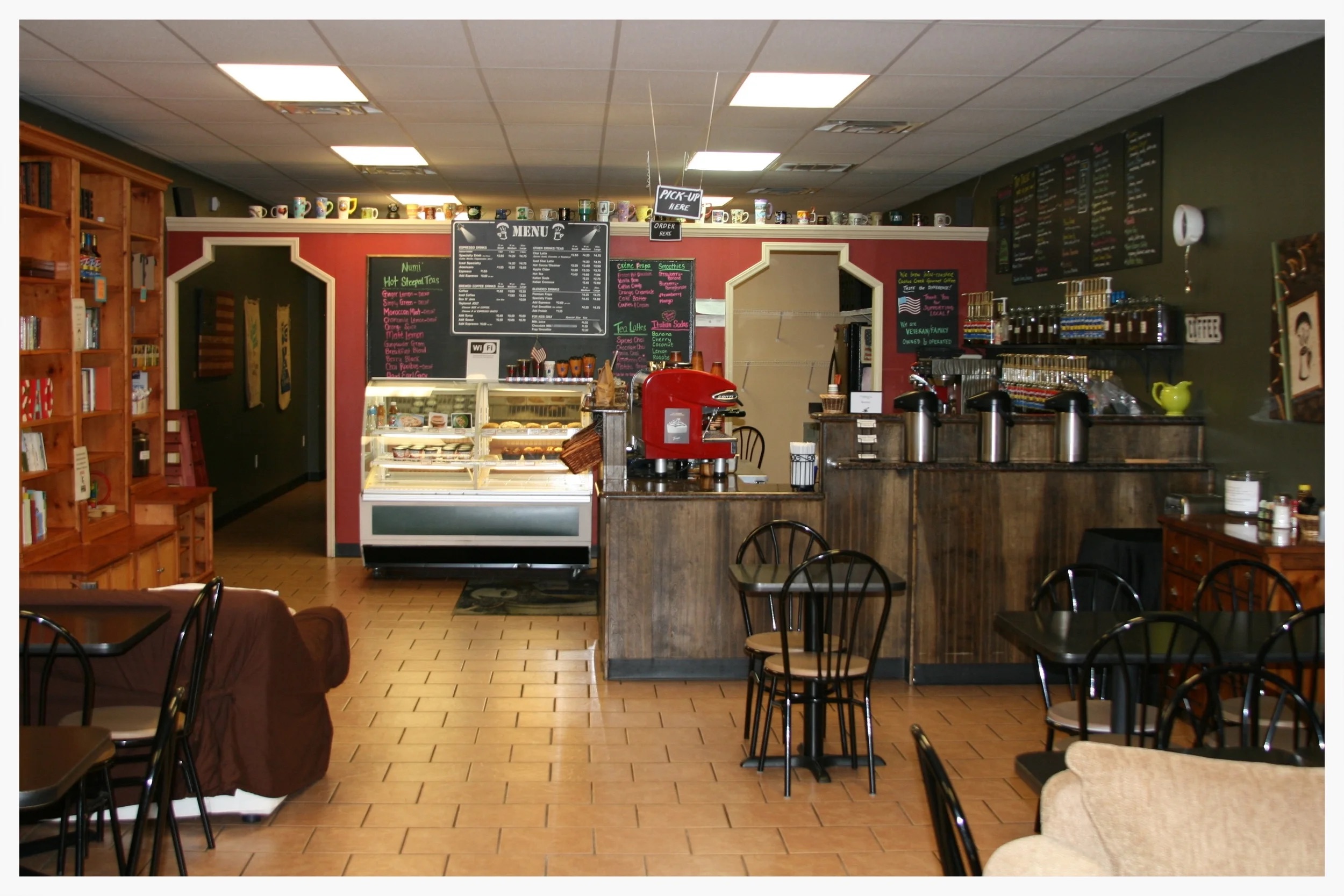
Coffee Scene has been part of Fayetteville for decades. This shop anchored local coffee culture in this city long before newer shops showed up. People see Coffee Scene as the nostalgic heart of Fayetteville coffee. It did not try to be flashy. It just served honest coffee and gave people space to sit and talk.
Remote workers trust Coffee Scene for a reason. There are two locations. Morganton Road. And Hay Street downtown. Both have tables and room to settle in. The Morganton Road spot has an upstairs loft that is great for focus. The Hay Street location gives you energy from the downtown street life. Both locations work well when you need a few hours of laptop time.
Miller Brew is part of Miller’s Crew. Miller’s Crew is a nonprofit that provides workplace training to young adults with differing abilities. So this coffee shop has been purpose-built in. You feel it when you walk in. The staff takes pride in the work. The shop is clean and modern.
Remote workers like Miller Brew because it is calm and well-designed. You can pick a table and make it your little office for a bit. There is no clutter and no chaos. It is a great place to reset your brain and get things done.
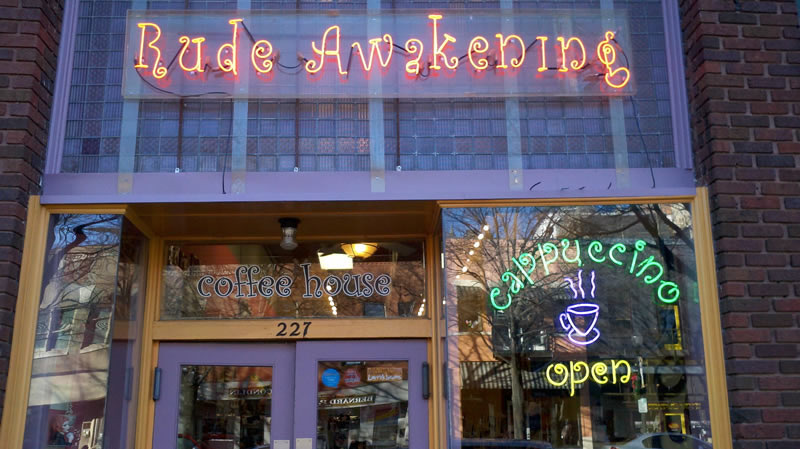
Rude Awakening is a downtown Fayetteville classic. It has been there for years. It helped shape the downtown district when it was still growing. Many locals treat this place like a landmark. It shows up in old photos. It shows up in local stories.
Remote workers love the courtyard in the back. It is quiet and peaceful. Sometimes a small courtyard is all you need to think clearly. Rude Awakening gives you that option.
Cumberland Coffee Roasters roasts its own beans. They built their brand on quality coffee first. The people behind the shop care about the product. That shows in the drinks and in the regulars who choose this place often.
Remote workers like this shop because it is not chaotic. It is steady. Calm. You can sit here with your laptop and breathe. This shop also sits closer to the Hope Mills side. So if you live or are searching for homes for sale in Hope Mills, NC, this place may be your new regular spot.
Blanc Coffee is owned by the team behind Personal Best Coffee. They are known for high standards. They focus on clean space, clean design, and clean flavor. Blanc leans into modern coffee culture and does it well.
Remote workers who care about energy and mood like this place. The design style may help you focus. It feels like a creative studio that also happens to sell great coffee.
Something Brewing has community roots. It feels personal. You get the sense that this shop grew from relationships and local faces. That gives it charm and warmth right when you walk in.
Remote workers come here when they want a quieter day. Some shops wake you up. This shop calms you down. It is good for steady writing or deep reading.
Jumpin Java is one of those local spots that has survived because it stayed true to who it is. It is simple. It is friendly. People who love this shop do not want it to change.
Remote workers like that they can sit and no one pressures them. It feels like a safe space to work without feeling judged or rushed.
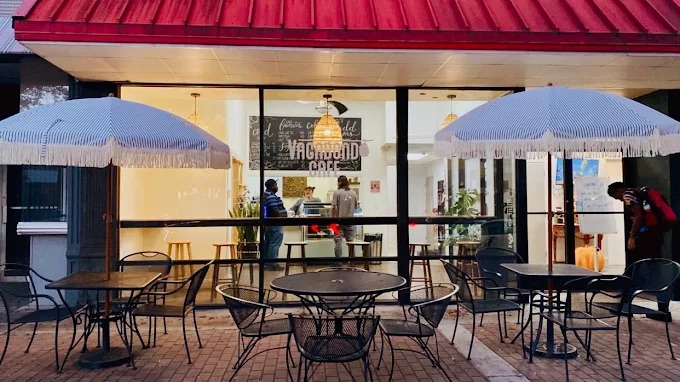
Vagabond has an artistic mood. It leans into its creative spirit. The owners built a space that feels expressive and handcrafted. You see personality in the decor and in the menu.
Remote workers in creative fields like to come here. The energy may help spark ideas. It feels like the right place for designers, writers, editors, and people who need to think differently for their work.
The Farmers Cat Cafe blends city and country. It has plants, wood textures, and natural touches. It feels softer than most coffee shops. There is an honest comfort that shows up when you sit down.
Remote workers who get drained by loud or intense spaces may love this shop. It gives you a slower pace where your brain can breathe and your work can flow.
Final thoughts on the best coffee shops in Fayetteville
From shops with deep community roots to newer coffee brands with a modern design style, each of these Fayetteville coffee shops adds something real to the local community.
Whether you just moved to Fayetteville and are searching for your work spot, or you have lived here for years and want to break out of your normal routine, these coffee shops offer more than just caffeine.
These coffee shops are part of what makes Fayetteville feel livable and lovable. If you are looking for a home near the parts of town that fit your lifestyle, contact All American Realty Group at 910-988-8578 | 3820 Raeford Road, Suite A, Fayetteville, NC 28304.
Frequently Asked Questions About Fayetteville Coffee Shops
Can you work remotely in most Fayetteville coffee shops? Yes. Most of these shops welcome people who bring laptops and stay for a bit.
Which Fayetteville coffee shops have the most space to work? The Coffee Scene on Morganton Road has an upstairs loft that is ideal for deep work.
Which Fayetteville coffee shop feels the most creative? Vagabond Cafe has an artistic vibe that may help spark ideas and new thinking.
Which side of Fayetteville is better for remote workers? It depends on your style. Downtown is more social. Hope Mills' side is calmer and slower-paced.
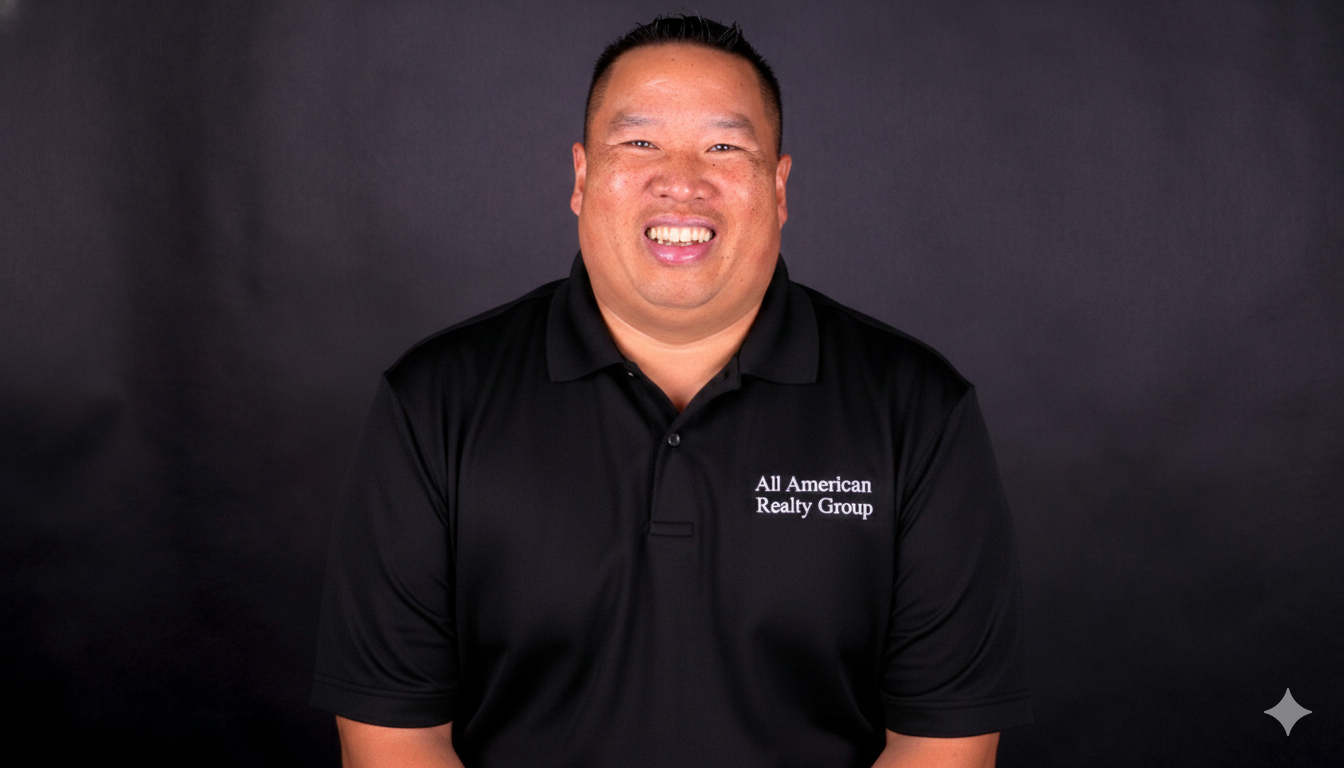
James M. Walker | All American Realty Group | Retired Fayetteville Police | 35 Years Local | 200+ Homes Sold
When military families plan a move to Fort Bragg, two places always rise to the top: Hope Mills and Fayetteville. Both are solid choices. Both have homes that fit different budgets. Both are close enough for a simple commute. But they feel very different day to day. So this breakdown may help you figure out which one matches your routine.
Commute to Fort Bragg
Driving to Fort Bragg from Hope Mills is simple. Most people use the All-American or Reilly Road gates. The drive time may shift a little based on traffic or where in Hope Mills you live. Many families tell me it takes around twenty to thirty minutes most days. That seems to hold when I talk with clients, too.
The bottom line is simple. Hope Mills offers a short and easy drive. It’s likely to stay that way too, since the roads keep improving.
Home Prices and Housing Style Differences
Hope Mills leans newer. Many homes have open floor plans, LVP floors, granite tops, and decent yard space. You can find a few established areas too. But most buyers tell me they moved here because they wanted low stress. They want a home that’s ready to go and doesn’t need much work.
Fayetteville is different. You’ll see older homes, historic pockets, and newer builds. You may find value there too if you’re open to updating a home.
Popular Hope Mills Neighborhoods Buyers Ask About
Many buyers like that Hope Mills has several well known areas. These spots come up often in buyer calls.
Gray’s Creek Bigger lots and a quieter feel. Strong school reputation.
Cypress Lakes Golf course area. Scenic views. Good for people who like outdoor space.
Eaglewood Farms Newer construction. Family friendly. Easy access to main roads.
Valley End More affordable homes. Good layouts. Great for first time buyers.
The Sentinels at Camden Woods
Newer homes with modern floor plans. A common pick for military families.
Schools and Education Priorities
Both Hope Mills and Fayetteville are in Cumberland County Schools. Some parents feel Hope Mills may offer a calmer feel. Others say Fayetteville gives them more choices. It depends on what your family values.
School zones may shift over time. And test data may not show the full story. Sometimes the best call is to visit a school in person and talk with parents.
Lifestyle and Daily Living
Hope Mills feels more relaxed. Many families move here to escape busy streets and tight spaces. You’ll see more homes with yards, sidewalks, and trees. It’s a simple pace.
One of my clients told me that moving from Fayetteville to Hope Mills cut her drive by ten minutes, but what she loved most was hearing crickets instead of traffic at night. That seems to sum up the difference in vibe pretty well.
Crime and Safety Research
Crime can vary street by street. Both cities have good blocks and rougher spots. Look at data, and drive the area in person.
If you’re PCSing to Fort Bragg, check your BAH and benefits early. It can help you plan ahead before you sign a contract.
FAQ:
Is Hope Mills considered part of Fayetteville?
No. Hope Mills is its own incorporated town, but it sits directly beside Fayetteville in Cumberland County. Many people who live in Hope Mills still work, shop, dine, and spend a lot of time in Fayetteville because the two communities are so close together.
Is Hope Mills a good place to live?
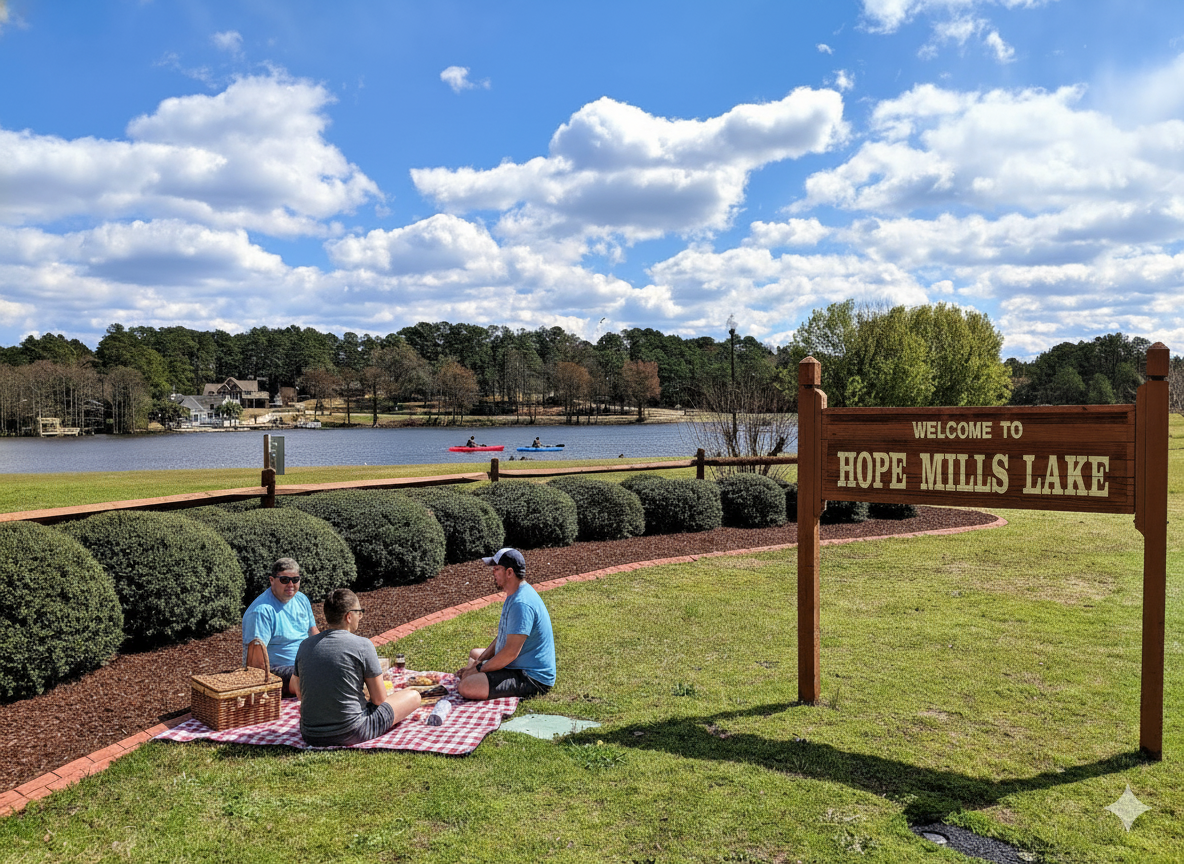
Hope Mills may be a good fit for someone who wants a smaller-town feel while staying close to Fayetteville. It offers established neighborhoods, newer communities, local parks, Hope Mills Lake, shopping, and convenient access to I-95. The right choice depends on your commute, budget, preferred home style, and how close you want to be to Fayetteville or Fort Bragg.
Which is closer to Fort Bragg, Hope Mills or Fayetteville?
Fayetteville is generally closer because parts of the city border Fort Bragg. However, commute time depends heavily on the exact neighborhood and which gate you use. Some areas of Hope Mills may offer a reasonable commute, while homes farther south can take longer during busy traffic periods.
Is Hope Mills or Fayetteville more affordable?
Neither location is always cheaper across the board. Fayetteville has a much larger housing market, so buyers can find a wider range of prices and property types. Hope Mills often has newer suburban homes, and prices can vary significantly by neighborhood, size, condition, and location.
James M. Walker | All American Realty Group | Retired Fayetteville Police | 35 Years Local | 200+ Homes Sold
Why So Many People Skip This Town
Most people moving to the Fayetteville or Fort Bragg area look at Fayetteville, Hope Mills, or Raeford. Hardly anyone thinks about Dunn. That is a mistake.
You have probably driven past it on I-95 without realizing how much it offers. Dunn might actually fit what you are looking for: lower home prices, a close-knit community, and quick access to both Fort Bragg and Raleigh. This guide breaks down what it is really like living in Dunn, North Carolina, from housing and jobs to schools, safety, and local life.
Where Is Dunn NC
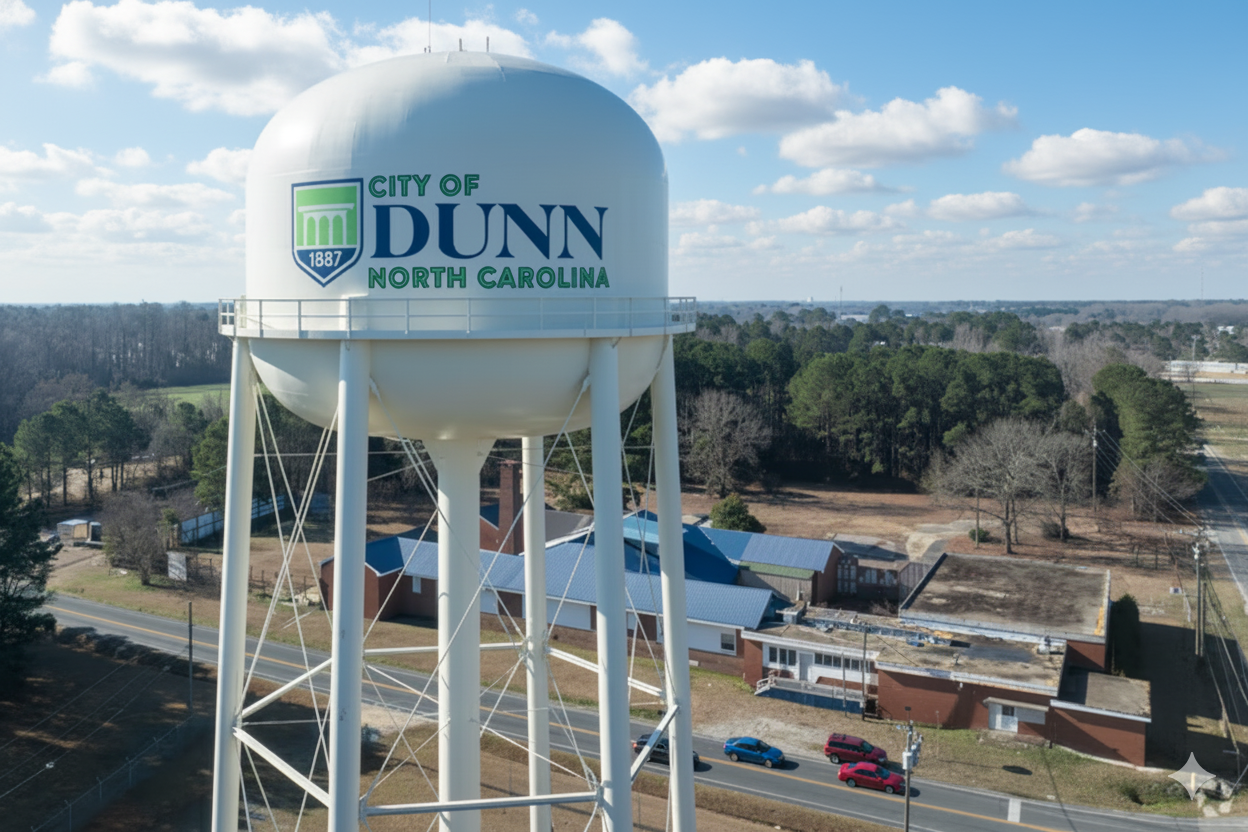
Dunn is located in Harnett County, right off I-95. It sits about 34 minutes from Fort Bragg and 42 minutes from Raleigh. That gives you an easy commute in either direction, city life one way and the military base the other.
With a population of around 8,500, Dunn is the largest city in Harnett County but retains a small-town feel. The community mixes families, retirees, and commuters. Locals take pride in their history and hospitality. Dunn has won the All-America City Award twice for civic involvement and revitalization efforts.
Cost of Living and Housing in Dunn
Home Prices
Affordability is one of Dunn's biggest draws. As of late 2025, the median home price ranges between $230,000 and $295,000. That is about 30% below the North Carolina average and nearly half the cost of Raleigh's median. Homes here typically sell within 40 to 60 days.
Expect three and four bedroom homes between $250,000 and $300,000, often with larger yards and fewer HOA restrictions than you find closer to Fort Bragg. In broader Harnett County, prices average between $320,000 and $340,000, so Dunn remains one of the most affordable spots in the region.
Rental Market
Renters will find solid value as well. Median rent sits between $1,075 and $1,300, which is below the state average. Two and three bedroom homes typically rent for $800 to $1,200. Rents have climbed slightly in the past year but Dunn remains one of the more affordable places to live near Fort Bragg.
For military families on a BAH budget who want more space and a quieter environment, Dunn is worth putting on the list alongside Raeford and Hope Mills.
Jobs and the Local Economy
Dunn has a small but steady job market with over 25,000 openings within 25 miles. Top industries include manufacturing, healthcare, logistics, retail, and education. Major employers include Harnett County Schools, Godwin Manufacturing, ADUSA Distribution, and Rooms To Go.
Average salaries range from $45,000 to $55,000, which stretches further due to Dunn's lower cost of living. Many residents commute north to Raleigh or south to Fort Bragg, enjoying a quieter small-town lifestyle between the two.
Schools in Dunn NC
Dunn is part of Harnett County Schools, which serves more than 20,000 students across 29 schools. The district focuses on academic growth, safety, and teacher retention. About 56% of schools met or exceeded growth goals last year with reading and math proficiency improving year over year.
Local options include Dunn Elementary, which is undergoing a $22 million rebuild opening in 2027, Dunn Middle School, and Triton High School, known for athletics and hands-on programs including welding, culinary arts, and health sciences.
The standout in the district is Harnett County Early College, where students earn both a high school diploma and an associate degree with near 100% college acceptance rates. For military families with motivated students, this program is worth knowing about.
For higher education, Campbell University in nearby Buies Creek offers programs in law, business, and health sciences and serves as a strong local option for families who want to stay in the area. You can review school performance data at NC School Report Cards.
Thinking about buying near Fort Bragg and trying to figure out which area fits your family best? We have helped 200+ military families work through exactly this decision. Schedule a free consultation here.
Crime and Safety in Dunn
We are going to be straight with you on this one. Crime is one of Dunn's challenges. Violent crime runs higher than the national average and property crime follows a similar pattern. The southeast part of town tends to be the safest area for families buying homes.
The positive trend is that violent crime dropped about 11% last year and downtown revitalization efforts continue to improve the overall environment. For military families used to researching crime data before a PCS move, we always recommend reviewing specific addresses rather than relying on city-wide averages. Location within Dunn matters significantly.
You can review area-level crime data at CrimeGrade.org before committing to a specific address.
Restaurants and Local Life in Dunn
Downtown Dunn has a growing mix of restaurants and local favorites that make the city feel more active than its size might suggest.
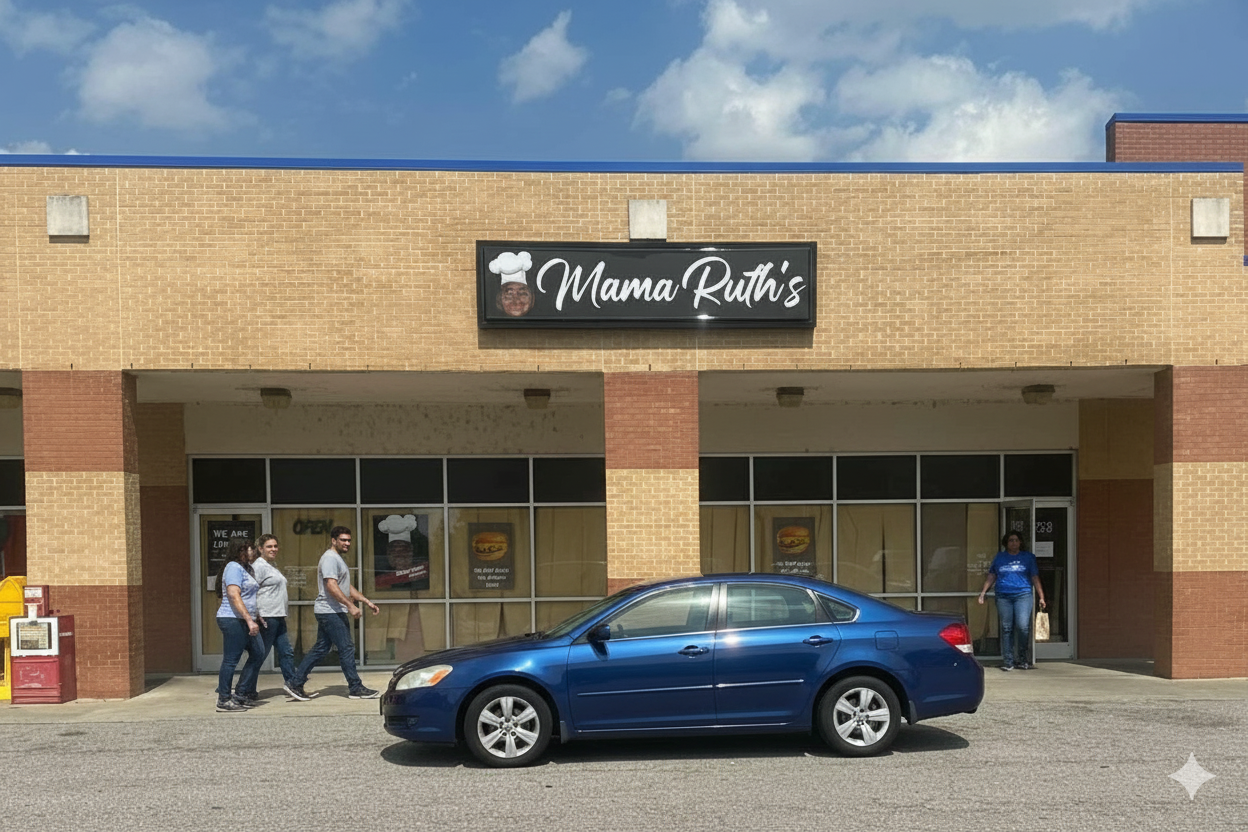
Mama Ruth's handles classic breakfast and Southern comfort food. Broad Street Deli and Market is known for fresh sandwiches and salads. Daddy D's BBQ is old-school North Carolina barbecue done right. The Butcher's Table is the upscale option with a full bar for a proper dinner out. Lucknow Taproom covers craft beer and casual food with live events on weekends.
For coffee, Coffee on Broad offers house-made syrups and espresso with mimosas on weekends. Inspirational Grounds Coffee House is known for baked goods and home-roasted beans. The Grind handles drive-thru lattes and smoothies for commuters who need to keep moving.
The Organic Butcher Shop at 219 E. Broad Street sells local organic meats, seafood, and ready-to-eat items and is worth knowing about for families who meal prep or cook at home regularly.
Things to Do in Dunn
Annual events in Dunn include the NC Cotton Festival each November with more than 130 vendors, live music, and dancing downtown. The Lucknow Music Festival showcases regional artists and food trucks. Weekly farmers markets feature local produce, crafts, and music. The General William C. Lee Celebration and Link Wray Festival bring parades, military tributes, and concerts celebrating the city's heritage.
Outdoor options include the Dunn-Erwin Rail Trail, a five-mile path along the Cape Fear River that works for walking or biking. Tart Park and Tyler Park offer playgrounds and splash pads for families with younger kids. Raven Rock State Park is about 20 minutes northwest and offers waterfalls and river overlooks for families who want more serious hiking.
Pros and Cons of Living in Dunn NC
Pros
Affordable homes and rentals well below the state average. Easy commute to both Fort Bragg and Raleigh. Friendly community feel with active downtown revitalization. Larger lots and fewer HOA restrictions than closer-in suburbs. Strong early college program for academically motivated students.
Cons
Higher crime rates than the state average, particularly for property crime. Limited nightlife and public transportation options. Smaller local job market compared to Fayetteville or Raleigh. The commute to Fort Bragg at 34 minutes is longer than Hope Mills or Spring Lake.
Is Dunn Right for Your Family
Dunn works best for specific types of buyers. Military families who want lower home prices and do not mind the commute tend to be happy here. First-time buyers stretching their BAH budget get more house for their money than they would find closer to the base. Families who want a genuine small-town environment with easy highway access to larger cities consistently find Dunn appealing once they actually visit.
It is not the right fit for families who need to minimize commute time or who want the density of amenities available closer to Fort Bragg. But for the right family it offers real value that most people overlook because they never take the time to look.
If you want to compare Dunn to other options near Fort Bragg, that is exactly the conversation we have with buyers before we start showing homes. We know the area well and can help you figure out where your priorities land.
Frequently Asked Questions About Moving to Dunn NC
How far is Dunn NC from Fort Bragg?
Dunn is approximately 34 minutes from Fort Bragg via I-95 South to US-401. It is one of the longer commutes among the suburbs military families consider near the base, but the affordability and access to I-95 make it worth evaluating for families who prioritize price and space over commute time.
Is Dunn NC affordable for military families?
Yes. Median home prices in Dunn range from $230,000 to $295,000, which is significantly below the North Carolina average and well below most suburbs closer to Fort Bragg. For military families using a VA loan, Dunn offers strong purchasing power relative to other areas in the region.
What school district is Dunn NC in?
Dunn is served by Harnett County Schools. The district has 29 schools and is steadily improving academic performance. Harnett County Early College is the standout program, offering students both a high school diploma and an associate degree with near 100% college acceptance.
Is Dunn NC safe?
Crime in Dunn runs above the state average, particularly for property crime. The southeast part of the city tends to be the safest area for families. Violent crime dropped approximately 11% last year. As with any city, specific location within Dunn matters significantly and we always help buyers evaluate individual addresses before making an offer.
Can I use a VA loan to buy in Dunn NC?
Yes. VA loans work throughout Harnett County including Dunn. The combination of lower home prices and VA loan benefits makes Dunn one of the more accessible markets for military buyers in the Fort Bragg area. Our VA loan guide covers the full process.
How does Dunn compare to Hope Mills or Raeford for military families?
Hope Mills and Raeford offer shorter commutes to Fort Bragg and generally lower crime rates. Dunn offers lower home prices and easy access to both Fort Bragg and Raleigh via I-95. The right choice depends on how much the commute matters relative to your budget and lifestyle priorities. We help buyers work through that comparison regularly.
About the Author: James M. Walker
James Walker has lived in Fayetteville and the surrounding areas for more than 35 years. After serving 20 years as a Fayetteville police officer and spending the past 6 years in real estate, he brings deep local knowledge and practical experience to every transaction. He specializes in helping military families, veterans, first responders, and relocating buyers navigate the process with clarity and confidence. Working alongside his wife, Stephanie, James focuses on education, strong communication, and helping clients make informed decisions when buying or selling in North Carolina.
About All American Realty Group
All American Realty Group helps buyers and sellers across Fayetteville, Raeford, Hope Mills, Spring Lake, and surrounding North Carolina communities. We specialize in helping military families, first-time buyers, and relocating homeowners understand financing options, down payment assistance programs, and local market conditions.
With deep knowledge of Cumberland County and the Fort Bragg area, our team focuses on clear communication, strategic planning, and making the buying or selling process simple.
If you are considering purchasing or selling a home anywhere in North Carolina, we can help you understand your options and build a plan that fits your budget.
Contact us at All American Realty Group at 910-988-8578 | 3820 Raeford Road, Suite A, Fayetteville, NC 28304
Down Payment Assistance in North Carolina: Who Qualifies?
What Is Down Payment Assistance in North Carolina?
Down payment assistance in North Carolina helps buyers cover part of their upfront home purchase costs. These programs can reduce the cash needed at closing and make homeownership more accessible.
Many buyers assume they need 10% or 20% down. In reality, some North Carolina programs allow qualified buyers to purchase with little money out of pocket, depending on income, credit score, and loan type.
Programs are typically offered through:
The North Carolina Housing Finance Agency (NCHFA) State Employees’ Credit Union (SECU) Local city or county housing departments Approved FHA, VA, USDA, and conventional lenders
These options help buyers across the state, including Fayetteville, Raeford, Hope Mills, Spring Lake, Raleigh, Charlotte, and beyond.
Who Qualifies for Down Payment Assistance in North Carolina?
Eligibility depends on the program, but most buyers must meet these requirements:
• Minimum credit score of 640 • Purchase a primary residence in North Carolina • Stay within program income limits • Meet purchase price limits • Complete an approved homebuyer education course • Move into the home within 60 days of closing
First-time buyers, repeat buyers, veterans, teachers, and first responders may all qualify depending on the specific program.
Income Limits and Credit Score Requirements in NC
Income limits vary by county and household size. Most programs use area median income guidelines. For example, limits in Cumberland County may differ from Wake or Mecklenburg County.
Credit score requirements typically start at 640. Manufactured homes and certain loan types may require higher scores.
Understanding these limits early helps prevent loan delays and surprises at closing.
Find Out What You Qualify for in North Carolina
Many buyers are surprised by how much assistance they qualify for.
If you are buying in Fayetteville, Cumberland County, or anywhere in North Carolina, we can review:
• Your credit score and eligibility • Available statewide and local programs • Whether assistance must be repaid • How it works with FHA, VA, USDA, or conventional loans • What your estimated monthly payment may look like
Call All American Realty Group at 910-988-8578 to review your options before you start shopping.
North Carolina Housing Finance Agency (NCHFA) Down Payment Programs
The NCHFA offers statewide programs that work with FHA, VA, USDA, and conventional loans.
NC Home Advantage Mortgage
Provides up to 3% of the loan amount in down payment assistance Forgiven after 15 years if you remain in the home Available to first-time and repeat buyers
NC 1st Home Advantage Down Payment
Provides $15,000 in assistance for first-time buyers and veterans Structured as a 0% interest deferred loan Forgiven over 15 years Minimum credit score of 640
These programs can often be layered with local assistance for greater savings.
SECU and Federal Home Loan Bank Grant Programs in NC
The State Employees’ Credit Union (SECU) offers strong programs for North Carolina residents, including military families and state employees.
SECU First-Time Homebuyer’s Mortgage
Finance up to 100% of the purchase price Add up to $2,000 for closing costs No private mortgage insurance required
Federal Home Loan Bank (FHLB) Grant Programs
Community Partners Program – Up to $20,000 First-Time Homebuyer Program – Up to $17,500 Workforce Housing Plus+ – Up to $15,000
These grants can significantly reduce upfront costs for eligible buyers.
NCHFA vs SECU: Which Down Payment Program Is Better?
Both offer strong benefits but work differently.
NCHFA programs are statewide and often tied to a percentage of the loan amount. Many options are forgiven over time if you remain in the home.
SECU programs may offer 100% financing and additional grant funding, particularly for teachers, first responders, and military families.
The better option depends on your income, employment, loan type, and long-term plans.
Local Down Payment Assistance Programs by North Carolina City
In addition to statewide programs, many cities and counties offer their own assistance.
Examples include:
Greensboro Homebuyer Assistance HouseCharlotte Program Raleigh Homebuyer Assistance Winston-Salem Homeownership Assistance Durham Homeownership Program Asheville Down Payment Assistance Wilmington Homeownership Assistance
Cumberland County Down Payment Assistance
Cumberland County offers:
Down Payment Assistance (DAP) – Up to $5,000 forgiven over 10 years GAP Loan – Up to $20,000 or $25,000 when combined with DAP
Buyers in Fayetteville, Raeford, Hope Mills, and Spring Lake often combine statewide NCHFA assistance with local Cumberland County programs to reduce upfront costs even further.
Do You Have to Repay Down Payment Assistance?
Repayment depends on the program.
Some assistance is forgiven over time if you remain in the home. Others are deferred loans that must be repaid if you sell or refinance before the forgiveness period ends. Grants typically do not require repayment.
Understanding repayment terms before closing is critical.
Why Down Payment Assistance Matters in North Carolina
Home prices, insurance, and closing costs have increased across North Carolina.
Down payment assistance helps buyers:
Reduce upfront expenses Preserve emergency savings Improve loan terms Buy sooner rather than waiting years to save
These programs are not only for low-income buyers. Moderate-income households use them strategically to manage cash flow and build long-term stability.
How to Apply for Down Payment Assistance in North Carolina
Review income and purchase limits through NCHFA.
Select an approved lender.
Complete a homebuyer education course.
Get pre-qualified.
Apply for eligible statewide or local programs.
Starting early improves your approval odds and gives you more options.
Frequently Asked Questions About Down Payment Assistance in North Carolina
Who qualifies for down payment assistance in North Carolina?
Most programs require a 640 credit score, income within limits, and purchase of a primary residence. Veterans and first responders may qualify for additional options.
Can you combine down payment assistance with VA, FHA, or USDA loans?
Yes. Many North Carolina programs work alongside FHA, VA, USDA, and conventional loans.
What are the income limits?
Limits vary by county and household size. They are based on area median income.
Is down payment assistance only for first-time buyers?
No. Some programs allow repeat buyers as long as eligibility requirements are met.
Can buyers in Fayetteville and Cumberland County qualify?
Yes. Buyers in Fayetteville, Raeford, Hope Mills, and Spring Lake may qualify for both statewide and local assistance programs.
Ready to See What You Qualify For?
Down payment assistance can significantly reduce your upfront costs, but eligibility depends on your credit score, income, loan type, and location.
About the Author James M. Walker
James Walker has lived in Fayetteville and the surrounding areas for more than 35 years. After serving 20 years as a Fayetteville police officer and spending the past 6 years in real estate, he brings deep local knowledge and practical experience to every transaction.
He specializes in helping military families, veterans, first responders, and relocating buyers navigate the process with clarity and confidence. Working alongside his wife, Stephanie, James focuses on education, strong communication, and helping clients make informed decisions when buying or selling in North Carolina.
All American Realty Group helps buyers and sellers across Fayetteville, Raeford, Hope Mills, Spring Lake, and surrounding North Carolina communities. We specialize in helping military families, first-time buyers, and relocating homeowners understand financing options, down payment assistance programs, and local market conditions.
With deep knowledge of Cumberland County and the Fort Bragg area, our team focuses on clear communication, strategic planning, and making the buying or selling process as simple as possible.
If you’re considering purchasing or selling a home anywhere in North Carolina, we can help you understand your options and build a plan that fits your budget.
All American Realty Group 910-988-8578 3820 Raeford Road, Suite A Fayetteville, NC 28304
If you’re PCSing to Fort Bragg, North Carolina, you’ve got one big decision to make: should you rent, buy, or stay on base?
Every military family has their own story. One says, “We made money buying.” Another says, “We should’ve rented.” And someone else swears, “Stay on base and avoid the stress.”
So who’s right? Truth is, it depends on your career stage, finances, family size, and how long you’ll be stationed here.
In this guide, we’ll break down the pros and cons of each option — with real examples, local insights, and a few things most people don’t think about when moving to Fayetteville and the surrounding areas.
Start With Your Goals
Before you decide, ask yourself a few questions:
How long will I be stationed at Fort Bragg?
Am I looking to build equity or keep things simple?
What’s most important to my family — convenience, space, or flexibility?
Your answer will help you figure out which option fits best. Let’s take a look at all three: living on base, renting off post, and buying a home.
Living On Base at Fort Bragg
For a lot of soldiers and families, living on base just makes life easier. You’re five minutes from work, close to the commissary, the gym, and schools. Forget the long lines at the All American or Yadkin gate — you’re already there.
Why Some Families Love It
No commute, no utility bills, and no maintenance calls.
You’re part of a built-in community that understands deployments and military life.
Everything’s close — from the PX to youth sports.
It’s also predictable. Your BAH covers housing, and you don’t have to stress about repairs or landlords.
Many families say living on base is a relief during deployments because everything feels stable and familiar.
The Tradeoff
You give up some control. Waitlists can be long, and you might not get to pick your exact home. Plus, your BAH goes straight to the housing company — money you’ll never get back.
If convenience and community matter more than flexibility, on-base housing makes sense. But if you want more space or independence, it’s worth looking off post.
Renting Off Post: Flexibility and Freedom
Renting gives you choices. You can decide what kind of home you want, what area you want to live in, and how close you want to be to post.
Some of the most popular spots near Fort Bragg include:
If you’re only staying two or three years, renting off post often makes the most sense. But if you’re planning to stick around, buying starts looking smarter — especially with how steady the Fayetteville housing market has been lately.
Buying a Home Near Fort Bragg
PCSing and not sure if you should rent, buy, or stay on base?
Get a quick, no-pressure plan that fits your timeline, BAH, and goals.
Buying is how you make your BAH work for you. Instead of paying rent, you’re building something you can own — and eventually profit from.
The Fayetteville, Hope Mills, and Raeford areas are all great spots for military families who want to invest and still stay close to post.
Why Buying Makes Sense
You’re building equity — every payment increases your ownership.
With a VA loan, you can buy with no down payment and no PMI.
You can paint, fence the yard, and make the home truly yours.
When you PCS again, you can keep it as a rental and build wealth long-term.
Real Example: One of my E-6 clients bought a home in Hope Mills for $220,000. Five years later, he sold it for $295,000 — walking away with around $50,000 in profit.
That one PCS move gave him a financial cushion for his next duty station.
Things to Keep in Mind
Buying isn’t for everyone. There are repairs, maintenance costs, and closing fees to consider. If you’re only here for a year or two, renting might be the safer play. But if you’re staying three or more years — or you think you’ll come back later — buying is usually the smarter move.
Comparing Your Options
Category
Stay On Base
Rent Off Post
Buy a Home
Cost Predictability
Very high
Moderate
Depends on taxes/loan
Flexibility
Low
High
Moderate
Equity Growth
None
None
Yes
Maintenance
Covered
Shared
Homeowner’s job
Community
Tight-knit military
Civilian + military mix
Neighborhood choice
Commute
0-5 minutes
10–30 minutes
10–40 minutes
How to Choose What’s Right for You
Check your timeline.
Short assignment (under 2 years): stay on base or rent.
Longer stay (3+ years): buying can build serious value.
Look at your finances.
Check your credit, savings, and current debts.
Meet with a Realtor in Fayetteville NC or a local VA lender.
Consider your lifestyle.
Need privacy? Renting or buying gives you that.
Want to stay close to post and community life? On base might fit better.
Check Fayetteville North Carolina crime rate maps and local school zones before deciding.
Local Insight from a Realtor Near Fort Bragg
As a real estate agent in Fayetteville NC, I’ve helped hundreds of service members figure out what’s best for their situation. Most of the time, the right answer depends on two things — how long you’ll be stationed here and what your future goals look like.
If you’re PCSing to Fort Bragg, there’s no wrong choice. But there is a smart choice — one that fits your timeline, family, and budget.
Whether it’s off-post housing near Fort Bragg, homes for sale in Raeford, or homes for sale in Spring Lake, there’s a place that fits every lifestyle and every mission.
Final Thoughts
If convenience and community are your top priorities, staying on base may be your best move. If you want flexibility and less responsibility, renting off base gives you freedom. If you’re thinking long-term and ready to invest, buying a home near Fort Bragg builds wealth and stability.
Whatever you choose, make the decision that serves your family’s goals — not just the one that feels easiest today.
And if you’d like help exploring your options, we’d love to guide you.
Thinking about moving to Fayetteville, NC, or one of the surrounding towns like Hope Mills, Raeford, or Spring Lake? October 2025 may be the perfect time to make that move. Fall is bringing buyers in our area something we don’t see often — more choices, less competition, and motivated sellers.
And here’s something many service members overlook: if you’re currently living on base in Fort Bragg on-post housing, you’re already paying out your Basic Allowance for Housing (BAH) each month. Instead of that money going toward rent, you could use your BAH to cover a mortgage — in some cases, paying for most, if not all, of your monthly payment. That’s why so many military families are choosing off-post housing near Fort Bragg and building long-term equity.
As top Realtors in Fayetteville, NC, we’ve helped countless military families PCSing to Fort Bragg use their BAH wisely to buy a home instead of renting. And with October shaping up to be one of the most buyer-friendly months in years, the timing couldn’t be better.
October is Buyer-Friendly in Fayetteville
1. Less Competition in the Market
The summer rush is over. Families who needed to move before school started are already settled, and PCS moves to Fort Bragg peak between May and August. By October, the buyer pool in Fayetteville, Hope Mills, and Raeford is smaller. That means fewer bidding wars and more negotiating room.
2. Motivated Sellers in Our Area
Sellers who still have their homes on the market in October often need to sell before the holidays or by year-end. This is especially true in towns close to Fayetteville, like Spring Lake and Raeford, where military relocations and job transfers play a big role. Builders in Hope Mills and Harnett County (like Anderson Creek and Linden Oaks) also tend to roll out fall and year-end incentives, making October a great time to look at new construction homes.
3. A Slower, More Flexible Pace
October’s real estate pace is different than summer. Homes sit on the market longer, which gives you time to do inspections, explore financing options, and compare different suburbs of Fayetteville. If you’re moving to Fayetteville NC, from out of state or shifting from on-post to off-post housing near Fort Bragg, NC, that extra breathing room is invaluable.
What We’re Seeing in Fayetteville Right Now
Local data shows that homes across Fayetteville, Hope Mills, and Raeford are spending longer on the market this fall compared to the spring and summer rush. Price reductions are more common in October, and motivated sellers are offering concessions like help with closing costs. Inventory has stayed steady with more than 2,000 active homes across Cumberland, Hoke, and Harnett Counties — giving buyers real choices they didn’t have just a year or two ago.
Things to Keep in Mind
Inventory is lower than in summer: While choices aren’t as wide as in June or July, many homes left from summer are now price-reduced. That means buyers often get better deals.
Holiday and tax timelines: Some sellers want to close before the end of the year, which can add urgency, but this often works in the buyer’s favor during negotiations.
Crime rate awareness: In Fayetteville, North Carolina, the crime rate is something many buyers ask about when choosing neighborhoods. Working with experienced real estate agents in Fayetteville, NC, can help you navigate which areas best fit your lifestyle and comfort level.
Local Insights for Buyers
Here’s why fall works especially well in the Fayetteville area and the surrounding suburbs:
Military PCS cycles: Summer PCS moves are over, meaning fewer military families competing in the fall.
Suburban variety: Buyers looking at homes for sale in Spring Lake, NC (close to Fort Bragg’s gates), homes for sale in Raeford, NC (popular with military families wanting more land), or homes for sale in Hope Mills, NC (family-friendly schools and amenities) all benefit from October’s calmer market.
Weather advantage: North Carolina’s mild fall weather makes moving, home projects, and inspections easier compared to winter.
Frequently Asked Questions About Buying a Home in Fayetteville, NC
Q1: Is October really the cheapest month to buy a house in Fayetteville, NC? Yes, in most cases. October consistently brings motivated sellers, fewer competing buyers, and more price reductions compared to the summer rush. Whether you’re looking at homes for sale in Fayetteville NC, Hope Mills, or Raeford, fall often means more negotiating power.
Q2: What are the best neighborhoods in Fayetteville NC for military families? Areas like Jack Britt, Haymount, and West Fayetteville are consistently popular thanks to good schools, amenities, and proximity to Fort Bragg. Many families also choose Spring Lake or Raeford for off-post housing with more space and privacy.
Q3: I’m PCSing to Fort Bragg. Should I rent or buy in 2025? If you plan to stay 3 years or more, buying is often smarter — especially when you can use your BAH to cover most of your mortgage. With VA loan benefits and Fayetteville’s affordable housing compared to other military towns, many PCS families choose to buy instead of rent.
Q4: What towns close to Fayetteville NC are best for commuting to Fort Bragg? Popular choices include Hope Mills, Raeford, Spring Lake, and parts of Harnett County like Anderson Creek. These areas balance shorter commutes, lower Fayetteville North Carolina crime rates, and strong resale value.
📲 Ready to start your home search? Contact us at All American Realty Group at 910-988-8578 | 3820 Raeford Road, Suite A, Fayetteville, NC 28304 Or schedule a consultation here: Book on Calendly
❓ Frequently Asked Questions About Buying a Home in Fayetteville, NC
Q1: Is October really the cheapest month to buy a house in Fayetteville, NC? Yes, in most cases. October consistently brings motivated sellers, fewer competing buyers, and more price reductions compared to the summer rush. Whether you’re looking at homes for sale in Fayetteville NC, Hope Mills, or Raeford, fall often means more negotiating power.
Q2: What are the best neighborhoods in Fayetteville, NC, for military families? Areas like Jack Britt, Haymount, and West Fayetteville are consistently popular thanks to good schools, amenities, and proximity to Fort Bragg. Many families also choose Spring Lake or Raeford for off-post housing with more space and privacy.
Q3: I’m PCSing to Fort Bragg. Should I rent or buy in 2025? If you plan to stay 3 years or more, buying is often smarter — especially when you can use your BAH to cover most of your mortgage. With VA loan benefits and Fayetteville’s affordable housing compared to other military towns, many PCS families choose to buy instead of rent.
Q4: What towns close to Fayetteville NC, are best for commuting to Fort Bragg? Popular choices include Hope Mills, Raeford, Spring Lake, and parts of Harnett County like Anderson Creek. These areas balance shorter commutes, lower Fayetteville, North Carolina, crime rates, and strong resale value.
Selling your home in North Carolina during the fall season takes careful planning. The air cools, leaves change, and buyers shift their focus. While spring is often the busiest time, October still brings motivated buyers—families who want to move before the holidays and those relocating for work or military orders. With the right approach, fall can be a smart time to sell.
Get Your Home Fall-Ready
Curb appeal is key. Keep the yard tidy, rake often, and clear out gutters. Add pops of color with mums or pansies. A simple wreath or pumpkins on the porch make the home feel welcoming. Skip the overdone Halloween displays—buyers need to picture themselves in the space.
Inside, focus on clean and cozy. Declutter, remove personal items, and let in light. Test your heating system to make sure it’s working. Buyers notice as temperatures drop. If you have a fireplace, stage it as a highlight feature.
The state’s housing market in fall 2025 is sending mixed signals. Home values average around $363,000, but listing prices remain higher. Homes are spending about two months on the market.
October has historically shown an uptick in activity—listings increased nearly 38% and sales climbed by 18% in past years. Even so, buyers are negotiating more aggressively, and many homes close below list price. The message: price right from the start.
Set a price that reflects current market conditions. Overpricing will keep your home sitting longer than you’d like. Use a comparative market analysis from a local agent to guide you.
This year, nearly one-third of homes saw price reductions. That shows buyers are in control. Entry-level homes under $250,000 remain in demand with less inventory, while higher-priced homes face more competition.
Professional photos are non-negotiable. Fall light can make your home look stunning when shot correctly. Add a virtual tour for buyers shopping online.
If you’re hosting an open house, lean into the season. A bowl of candy or the scent of warm cider can make visitors feel at home. Showcase areas for entertaining—buyers are already picturing holiday gatherings.
Get your home listed on the MLS and major sites like Zillow and Realtor.com. A strong online presence is essential since that’s where most buyers start.
In North Carolina, sellers must complete a Residential Property and Owners’ Association Disclosure. This covers any known issues with the home. Leaving out key details can lead to legal headaches later.
Consider running a title search early. That way, you know if there are liens, easements, or HOA matters that could slow the sale.
Costs and Closing
On average, sellers in North Carolina pay about 2.7% of the sale price in closing costs. For a $363,000 home, that’s a little over $9,000. You’ll also pay agent commissions unless you sell on your own. Average commission runs near 5.5%, though alternatives exist.
State law requires an attorney to handle closings. They’ll manage the deed, recording, and transfer of funds. From accepted offer to closing, expect about 35 days, with the full process averaging 99 days, including time on market.
Seasonal Selling Tips
Keep walkways clear of wet leaves for safety.
Highlight energy efficiency upgrades like new HVAC or insulation.
Stage indoor gathering spaces for family events.
Use light, warm scents like cinnamon or vanilla without going overboard.
Small touches go a long way in making your home stand out to fall buyers.
Final Thoughts
Selling a home in October may not bring spring’s rush, but it still offers a real opportunity. Buyers are out there—they’re just more selective and willing to negotiate.
With the right preparation, smart pricing, and effective marketing, you can close before the end of the year. Partner with a trusted North Carolina real estate agent to guide you through the process, and you’ll be ready for a smooth sale this fall.
If you need a Realtor in North Carolina, reach out to us. We have a large network across the state and can connect you with the right expert wherever you are.
Contact Us
Contact us at All American Realty Group at 910-988-8578 | 3820 Raeford Road, Suite A, Fayetteville, NC 28304. Schedule a meeting here: Book a time with us.
.png)
.jpeg)
.jpeg)
.jpeg)
.jpeg)




.png)