Lumberton, North Carolina, initially appears appealing.
Homes are affordable. The city sits right off I-95. The pace feels small and familiar.
But daily life here does not always match expectations.
Many people move to Lumberton expecting one thing and experience something very different.
Many buyers search for reasons you might not want to move to Lumberton, North Carolina, before committing. This article focuses on what living here actually feels like on a day-to-day basis, not just what shows up online.
Common reasons people regret moving to Lumberton NC include high crime, struggling schools, limited jobs, isolation, and visible drug activity that affects daily life.
Crime Is a Serious Concern in Lumberton
Crime is the most common reason people regret moving to Lumberton.
Per capita, Lumberton ranks among the most dangerous cities in the country.
Because the population is small, it often avoids national headlines.
But per-capita data tells a clearer story.
Per capita crime data from NeighborhoodScout consistently ranks Lumberton among the most dangerous cities of its size in the United States.
https://www.neighborhoodscout.com/nc/lumberton/crime
Independent safety analysis from CrimeGrade crime ratings places most areas of Lumberton in the lowest safety categories, with failing grades for both violent and property crime.
https://crimegrade.org/safest-places-in-lumberton-nc/
You are statistically safer than zero percent of U.S. cities.
Violent crime runs several times higher than the national averages.
Property crime is even higher.
FBI Uniform Crime Reporting data also shows crime rates far above national norms for a city this size.
https://cde.ucr.fbi.gov/
Lumberton’s location along I-95 brings constant movement through the city.
That includes transient traffic, repeat offenders, and drug-related activity.
For a city with fewer than 20,000 residents, the crime volume feels heavy.
Many people do not expect this before moving.
Poverty Shapes Daily Life in Lumberton
Lumberton struggles with long-term poverty.
Roughly one-third of residents live below the poverty line.
Median household income remains in the low forty-thousand range.
Many households rely on fixed income, assistance, or seasonal work.
Homes are affordable because wages remain low.
Job growth inside the city has been limited for years.
New construction is sparse.
Large employers are rare.
Small businesses often struggle to stay open.
Affordable housing attracts buyers.
Limited opportunity often surprises them later.
Why Lumberton Feels Isolated Despite I-95 Access
On a map, Lumberton appears well-connected.
It sits directly on I-95.
Fayetteville is roughly thirty minutes away.
Raleigh is under two hours, depending on traffic.
In daily life, the city often feels cut off.
High-paying jobs are limited.
Entertainment options are few.
Dining choices become repetitive quickly.
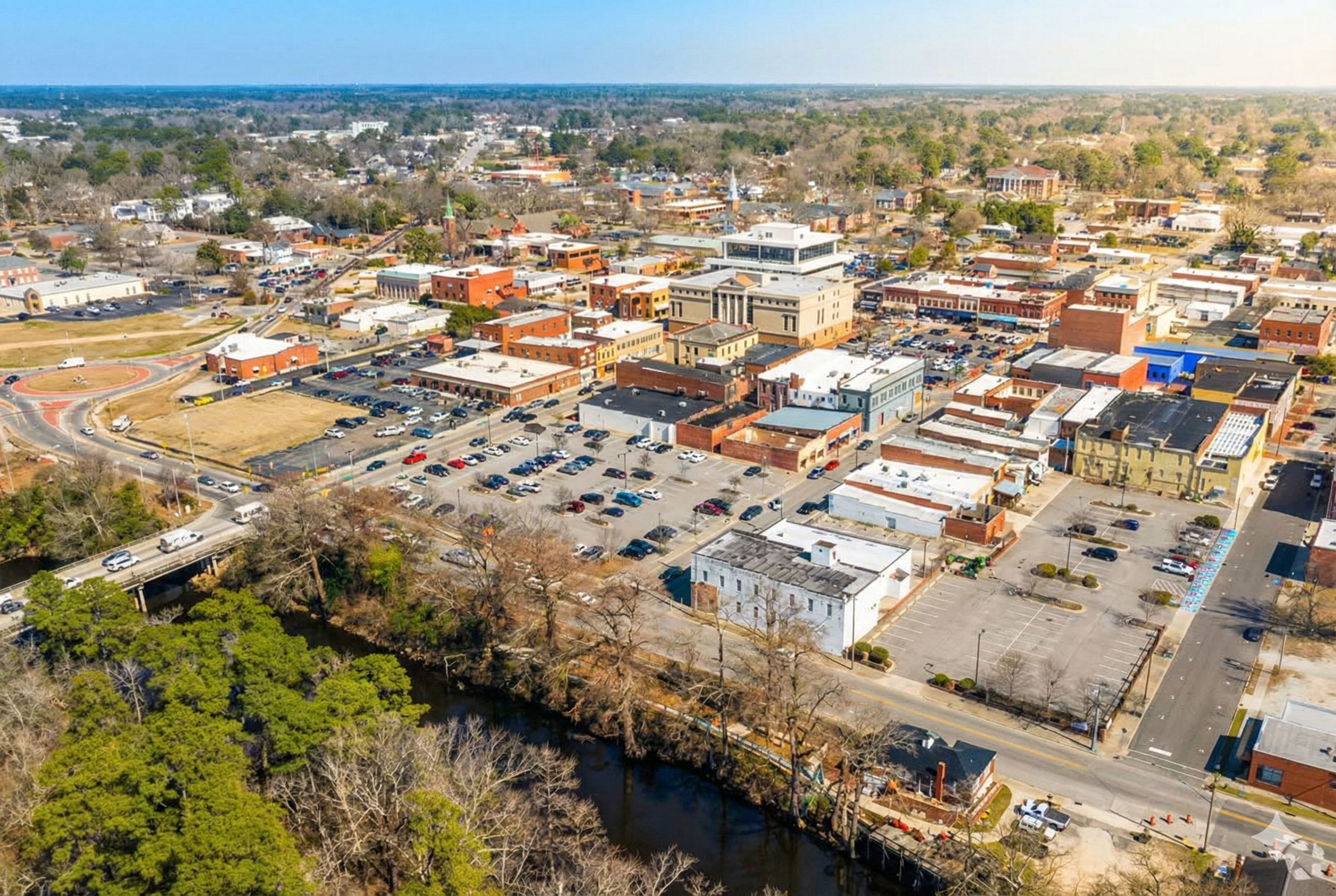
Advanced healthcare usually requires driving to larger cities.
Many parks and public spaces show years of neglect.
Flooding has also isolated the city during major storms.
Some residents struggled to leave during past hurricanes.
Living here can feel like being stuck between places, not connected to them.
Schools in Lumberton Struggle to Perform
Education is a major concern for families.
Local schools consistently rank below state averages.
Reading and math proficiency hover around forty percent.
Funding and staffing challenges are common.
Public data from North Carolina School Report Cards for Robeson County shows ongoing performance gaps across multiple grade levels.
https://ncreports.ondemand.sas.com/src/?county=Robeson
Only about one in five adults holds a bachelor’s degree.
More than twenty percent never finished high school.
Parents often describe gaps between student needs and available resources.
Some families seek alternatives.
Others eventually move away.
School quality is a frequent reason people leave Lumberton.
How Drugs and Trafficking Affect the Community
Lumberton’s location creates another challenge.
I-95 is a major corridor for drugs and trafficking.
This affects crime patterns across the city.
Residents report frequent thefts and break-ins.
Police presence is constant.
Addiction issues are visible in many areas.
Law enforcement faces an overwhelming call volume.
Lumberton has lost nearly nine percent of its population since 2000.
That decline reflects long-term strain, not a short downturn.
On paper, the city scores well for diversity and cost of living.
In daily life, safety and stability often matter more.
Why Expectations Often Miss Reality
Lumberton has real strengths.
The community can feel welcoming.
Housing costs are low.
Cultural diversity is strong.
But daily life tells a fuller story.
Crime affects routines.
Limited jobs restrict growth.
Schools struggle.
Infrastructure shows wear.
That gap between online perception and lived experience explains why regret is common among new residents.
Contact us at All American Realty Group
910-988-8578
3820 Raeford Road, Suite A, Fayetteville, NC 28304
https://www.fayettevillenchomesforsale.org/