



James M. Walker | All American Realty Group | Retired Fayetteville Police | 35 Years Local | 200+ Homes Sold
What Living in Fayetteville NC Is Actually Like
Most people researching Fayetteville find two types of content. Overly positive relocation guides that make it sound perfect, and crime headlines that make it sound dangerous. Neither one gives you an accurate picture of what daily life here actually looks like.
We have lived and worked in Fayetteville for over 35 years. James Walker spent 20 years as a Fayetteville police officer before moving into real estate. At All American Realty Group we have helped 200+ families relocate to this area. We know this city well enough to give you the honest version.
Here is what living in Fayetteville, North Carolina is actually like.
Fayetteville Is a Military City First
Everything about Fayetteville connects back to Fort Bragg. The economy, the culture, the housing market, the demographics, the restaurants, the retail. Fort Bragg is one of the largest military installations in the world and it anchors almost every aspect of life in the greater Fayetteville area.
That is a good thing if you are military or a veteran. You will be surrounded by people who understand your lifestyle, your schedule, your PCS timeline, and your VA benefits. There is a shared language and a shared experience here that you do not find in every city.
It can feel a little insular if you are a civilian with no military connection. But for the families we work with, that military community presence is usually one of the reasons they end up staying long after their service ends.
Cost of Living in Fayetteville
Fayetteville sits approximately 15% below the national average for overall cost of living. That gap is real and it shows up in every part of daily life.
Median home prices in the area run $220,000 to $260,000 depending on the suburb and current market conditions. For military families using a VA loan with no down payment, that price point puts homeownership within reach for most ranks E5 and above. Your BAH for Fort Bragg is set to reflect local housing costs and for most families it covers the mortgage payment on a home in this range.
Groceries run slightly below national averages with a good mix of options including Walmart, Food Lion, Harris Teeter, Aldi, and Lidl. Utilities average $250 to $350 per month outside of peak summer when air conditioning drives electric bills higher. Dining out is affordable with a wide range of options from quick casual to sit-down restaurants.
For a detailed breakdown of what things cost here compared to other military cities, our cost of living comparison guide covers it in detail.
Safety in Fayetteville
We are not going to sugarcoat this. Fayetteville has a higher crime rate than the national average, driven primarily by property crime in specific parts of the city. Vehicle break-ins and theft are the most common issues and they are almost always crimes of opportunity.
What most crime statistics do not tell you is that Fayetteville is a large city with very different characteristics from one area to the next. The outer suburbs like Hope Mills, Raeford, and the western Fayetteville corridor have significantly lower crime than the city-wide average suggests. Most military families live in these areas and the day to day experience is very different from what the headlines imply.
Violent crime exists and is concentrated in specific parts of the city, mostly downtown and some older corridors on the south and east sides. These are not areas where most military families buy homes.
The trend is also positive. Homicides dropped 48% from 2023 to 2024. Overall crime trended downward year over year. Fort Bragg's population, which is stable and law-abiding, is not counted in Fayetteville's crime statistics since the base has its own law enforcement. That skews the city comparison.
For a full safety breakdown by area, our Fayetteville safety guide covers which parts of the city are solid and which ones to avoid.
Where People Actually Live Near Fayetteville
Most military families do not live in Fayetteville proper. They live in the suburbs surrounding it. Here is a quick breakdown of the most popular options.
Hope Mills
Hope Mills is the most popular choice for military families near Fort Bragg. It sits just south of Fayetteville with its own town government, its own police department, lower crime than the city, lower property taxes, newer construction, and good schools. Home prices typically run $270,000 to $380,000. It is where we spend the most time with military buyers.
Raeford
Raeford sits about 20 to 25 minutes west of Fayetteville in Hoke County. Lower home prices than Hope Mills, active new construction communities, and close proximity to Fort Bragg's back gates. A growing number of military families are choosing Raeford for the value and the space it offers.
Spring Lake
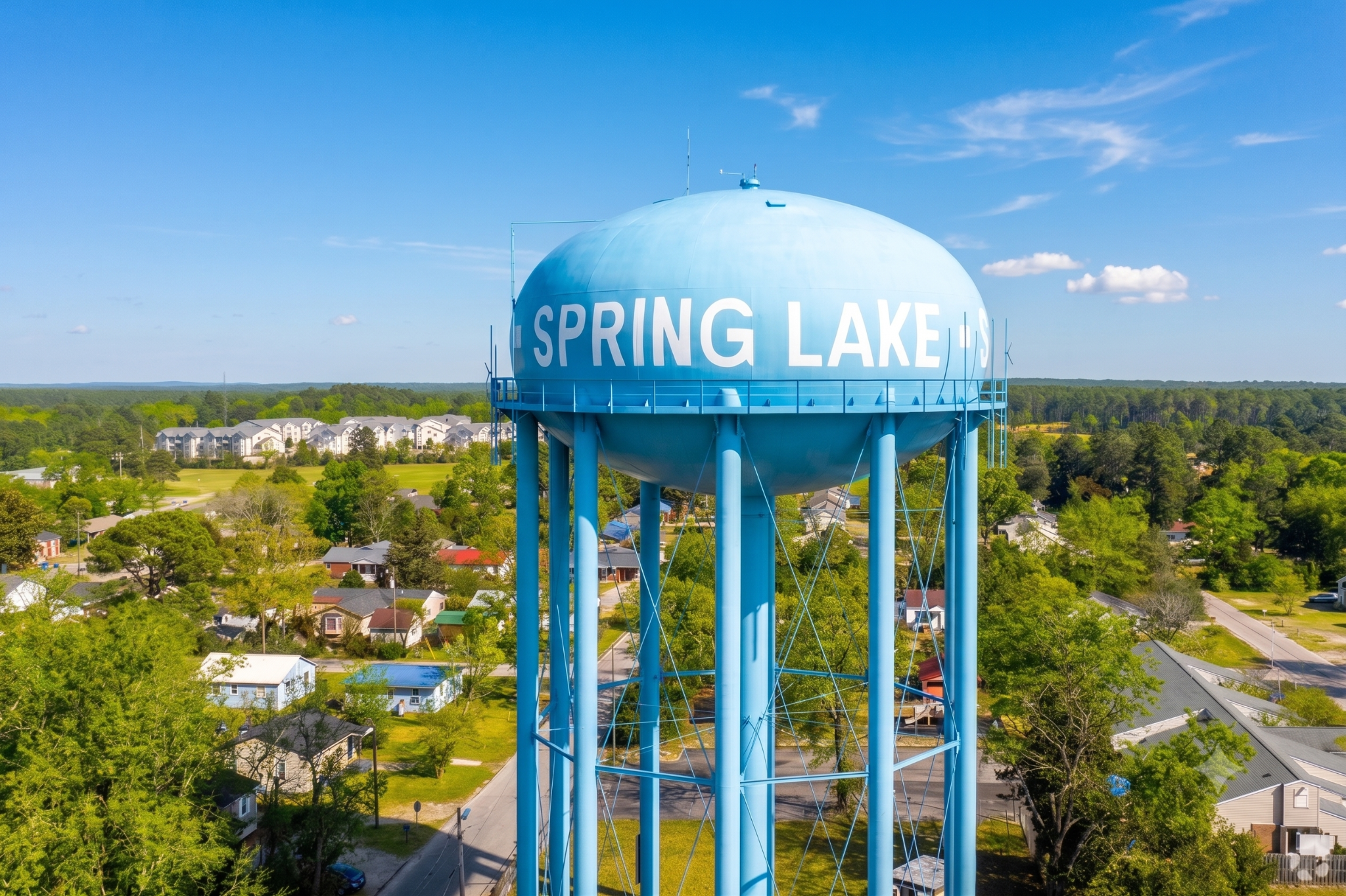
Spring Lake sits just north of Fayetteville outside the main gates of Fort Bragg. It has one of the shortest commutes to the installation of any suburb in the area. Home prices tend to run on the more affordable end which makes it attractive for buyers earlier in their careers or working with tighter BAH budgets.
Eastover and Stedman
Eastover and Stedman offer a rural feel east and southeast of Fayetteville. Low crime, larger lots, and lower price points. The tradeoff is distance from amenities. Families who want space and quiet tend to love it.
Inside Fayetteville
For families who want to be inside the city, the western corridor along Raeford Road is where the majority of military families live. Established areas like Haymount, Kings Grant, and Gates Four draw buyers who want character, golf course communities, or gated living. Each has a different feel and price point.
Trying to figure out which area fits your family before your PCS move? We have helped 200+ families work through exactly this decision. Schedule a free consultation here.
Schools Near Fayetteville
Fayetteville and most surrounding suburbs fall under Cumberland County Schools, one of the larger public school districts in North Carolina with more than 80 schools. Your home address determines your school zone. You cannot freely choose a different school just because you prefer it.
The most requested school zones from military families we work with are Jack Britt High School in western Fayetteville, Terry Sanford High School for its International Baccalaureate program, and Cape Fear High School for families in the Hope Mills area.
Raeford falls under Hoke County Schools, a separate district with its own programs including SandHoke Early College.
School zones should always be part of the home search conversation before you look at a single listing. For a full breakdown of schools by area, our Fayetteville schools guide covers everything military families need to know.
Property Taxes in Fayetteville
Property taxes vary depending on where you buy. Inside Fayetteville city limits you pay both the city and county rate, combined approximately $1.32 per $100 of assessed value. On a $250,000 home that is roughly $275 per month added to your escrow payment.
In Hope Mills, Raeford, Eastover, and Stedman the rates are lower because you are not paying the Fayetteville city rate. That difference can add up to $75 to $100 per month depending on the exact location. Over a three year tour that is meaningful money.
North Carolina also does not tax military retirement pay and offers a property tax exclusion for disabled veterans. Both of those benefits make the financial case for staying in North Carolina after service ends. Our property tax guide covers the rates by area and the veteran exemption process in full detail.
Weather in Fayetteville
Fayetteville has a humid subtropical climate. Summers are hot and humid with average highs in the upper 80s to low 90s from June through September. Air conditioning runs constantly and electric bills reflect that. Winters are mild with average highs in the mid-50s and lows in the 30s. Snow is rare and does not typically accumulate.
Spring and fall are genuinely pleasant. October and November are some of the best months to be in Fayetteville. For families relocating from northern states or northern installations, the mild winters are usually a welcome change.
Things to Do in Fayetteville
Fayetteville is not a major entertainment destination but it has more going on than most people expect before they arrive.
The Airborne and Special Operations Museum downtown is one of the best military museums in the country and admission is free. Cape Fear Botanical Garden offers 80 acres of gardens and walking paths. Festival Park hosts concerts and community events throughout the year. The Crown Complex hosts sports events, concerts, and shows.
Cape Fear River Trail gives cyclists and walkers a long paved path along the river. Lake Rim Park has trails, fishing, and picnic areas. Carvers Creek State Park is a short drive and offers hiking in a longleaf pine forest.
For day trips, the North Carolina coast is about two hours east. The mountains are about three hours west. Raleigh is about an hour and fifteen minutes north. The location puts a lot within reasonable driving distance even if Fayetteville itself is not a major destination city.
Pros and Cons of Living in Fayetteville NC
Pros
Cost of living runs about 15% below the national average. Home prices are affordable relative to most military cities. BAH for Fort Bragg covers the mortgage on a solid home for most ranks E5 and above. Strong VA healthcare access including Womack Army Medical Center and the Fayetteville VA Medical Center. Military community presence means you are surrounded by people who understand your life. North Carolina does not tax military retirement pay. The suburbs like Hope Mills and Raeford offer newer construction, good schools, and lower crime in a family-friendly environment.
Cons
City-wide crime statistics run above the national average, driven by property crime in specific areas. Most of the city is car dependent with limited public transportation. Summers are hot and humid. The dining and entertainment scene is limited compared to larger cities. Traffic around Fort Bragg's main gates can be slow during morning and afternoon rush.
Is Fayetteville NC a Good Place to Live
For military families and veterans, yes. It offers a combination of affordability, VA access, military community, and reasonable quality of life that is hard to find in one place. The suburbs surrounding the city give families options for school zones, commute times, home styles, and price points.
For civilians with no military connection who are weighing Fayetteville against other North Carolina cities, the value is still there but the military-centric culture may or may not appeal depending on what you are looking for.
The families who tend to struggle here are the ones who chose a home based on price alone without researching the specific area. The ones who do their homework, buy in the right suburb, and plug into the community quickly tend to be happy here.
Frequently Asked Questions About Living in Fayetteville NC
Is Fayetteville NC a good place to live for military families?
Yes. Fayetteville offers affordable housing, strong VA healthcare access, a military community that understands PCS life, and suburbs like Hope Mills and Raeford that consistently draw military buyers for their school zones, lower crime, and newer construction. BAH for Fort Bragg is set to cover housing costs in the area which makes homeownership achievable for most active duty families.
What is the cost of living in Fayetteville NC?
Fayetteville sits approximately 15% below the national average for overall cost of living. Median home prices range from $220,000 to $260,000. Groceries run slightly below national averages. Utilities average $250 to $350 per month. Dining out is affordable with a wide range of options.
Is Fayetteville NC safe to live in?
It depends on where you live. The outer suburbs like Hope Mills, Raeford, Eastover, and Stedman have significantly lower crime than the city-wide average. The western Fayetteville corridor where most military families live is generally stable and family-oriented. The areas closer to downtown and some older corridors on the south and east sides carry higher crime activity. Buying in the right area is the single most important factor in your safety experience here.
What are the best suburbs near Fayetteville NC for military families?
Hope Mills is the most popular choice overall for military families near Fort Bragg. Raeford draws families who want newer construction at lower price points. Spring Lake appeals to buyers who want the shortest commute to the main gates. Eastover and Stedman work for families who want rural space and low crime. The right choice depends on your unit location, school priorities, and budget.
Does North Carolina tax military pay or retirement?
North Carolina does not tax military retirement pay. Social Security benefits are also not taxed at the state level. Active duty military pay is subject to state income tax unless you are a legal resident of another state. For veterans retiring in North Carolina, the retirement pay exemption is one of the strongest financial arguments for staying in the state.
What is it like moving to Fayetteville NC for a PCS?
Most military families PCSing to Fort Bragg arrive between May and August. The home market moves quickly during PCS season so starting your search early matters. School zone research should happen before you look at listings. VA loans are widely accepted by sellers in this market. Working with a realtor who knows the military PCS process and the Fort Bragg area specifically saves significant time and stress. Our Fort Bragg PCS guide covers the full process from start to close.
How far is Fayetteville from Fort Bragg?
Fort Bragg sits adjacent to Fayetteville. Depending on which part of the city you live in and which gate your unit uses, the drive ranges from five minutes to about 25 minutes. Hope Mills runs 10 to 15 minutes to the main gates. Raeford runs 20 to 25 minutes to the back gates. Spring Lake is 5 to 10 minutes from the northern gates.
About the Author: James M. Walker
James Walker has lived in Fayetteville and the surrounding areas for more than 35 years. After serving 20 years as a Fayetteville police officer and spending the past 6 years in real estate, he brings deep local knowledge and practical experience to every transaction. He specializes in helping military families, veterans, first responders, and relocating buyers navigate the process with clarity and confidence. Working alongside his wife, Stephanie, James focuses on education, strong communication, and helping clients make informed decisions when buying or selling in North Carolina.
About All American Realty Group

All American Realty Group helps buyers and sellers across Fayetteville, Raeford, Hope Mills, Spring Lake, and surrounding North Carolina communities. We specialize in helping military families, first-time buyers, and relocating homeowners understand financing options, down payment assistance programs, and local market conditions.
With deep knowledge of Cumberland County and the Fort Bragg area, our team focuses on clear communication, strategic planning, and making the buying or selling process simple.
If you are considering purchasing or selling a home anywhere in North Carolina, we can help you understand your options and build a plan that fits your budget.
Contact us at All American Realty Group at 910-988-8578 | 3820 Raeford Road, Suite A, Fayetteville, NC 28304
:format(webp):quality(80)/u.realgeeks.media/jameswalker/Add_a_heading.jpg)